Sunlight & Vitamin D — What People in Victoria with MS Should Know
Living with MS in Victoria brings unique opportunities and considerations when it comes to safe sun exposure and vitamin D levels. Here’s a clear summary of what you should focus on and how you can apply it.
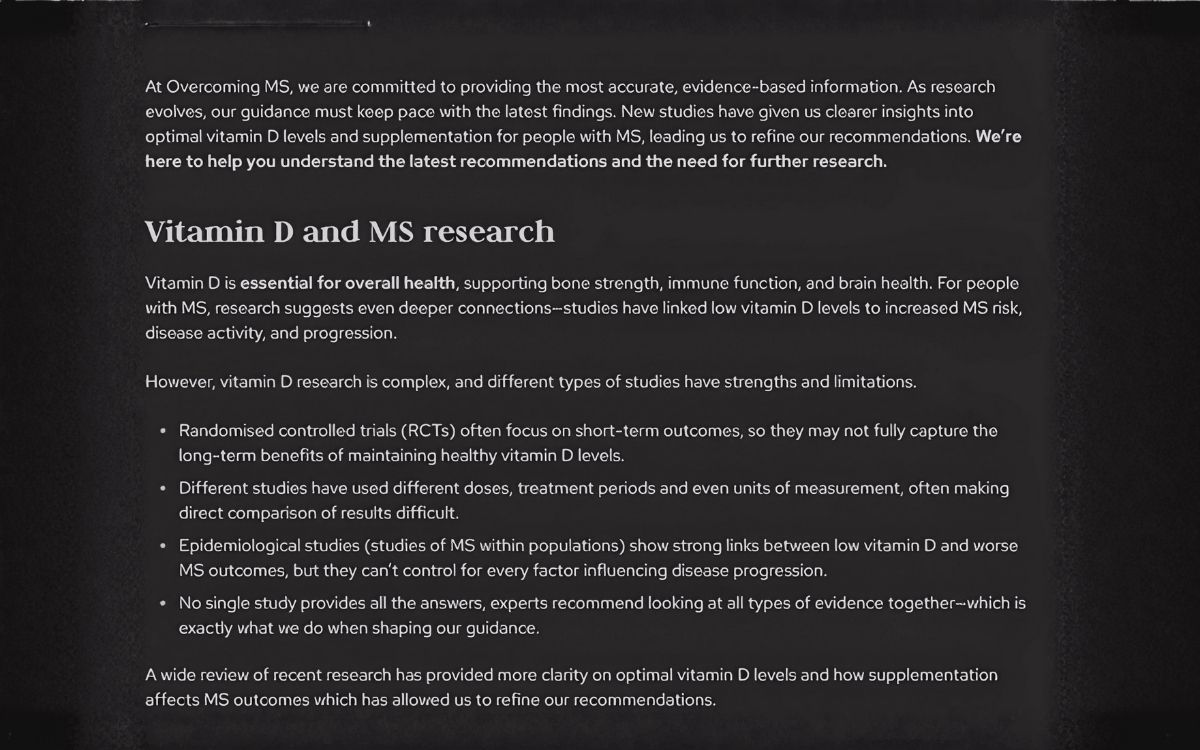
Why vitamin D matters for MS
Research shows that higher vitamin D levels are linked with slower MS progression and reduced risk of new brain lesions. Low levels of vitamin D are associated with increased relapse risk, greater disability and more disease activity. Overcoming MS
Sunlight in Victoria: the local context
Because we live in southern Australia, sun-intensity and UV-B levels change markedly across the year. In winter months, natural vitamin D production may drop. That means sunlight alone might not be enough to maintain optimal levels.
What to aim for
- A healthy vitamin D level for people with MS is often considered in the range of 100-150 nmol/L. Overcoming MS
- While there is no one-size dose, many experts working with MS recommend 4,000 IU per day, and sometimes 6,000-10,000 IU per day for those whose levels are low. Overcoming MS
- It’s best to test your 25-hydroxy vitamin D level via your GP.
Practical steps for you in Victoria
- Maximise safe sunlight exposure — during sunnier months spend short periods (10-20 minutes) in the midday sun with arms exposed (avoiding sunburn).
- Supplement sensibly — discuss with your neurologist or GP about vitamin D3 supplementation, especially through winter or if tests show low levels.
- Take it with a meal — vitamin D is fat-soluble, so take it with food containing healthy fats to boost absorption.
- Monitor regularly — aim to test every 6-12 months and adjust your dose based on results and seasonal changes.
- Avoid excess risk — high doses beyond what you need can raise calcium levels in the blood (hypercalcaemia) so it’s important to stay under medical supervision. Overcoming MS
Why this matters for you
By maintaining good vitamin D levels you may support immune-function, reduce relapse risk and potentially slow MS progression. While vitamin D alone isn’t a cure, it’s a significant piece of a broader MS-management plan.